CoreWeave debt selloff tests the economics of the AI infrastructure boom
Published
A sharp selloff in CoreWeave shares and bonds has turned the Nvidia-backed cloud provider into a test case for the debt-financed AI infrastructure boo...
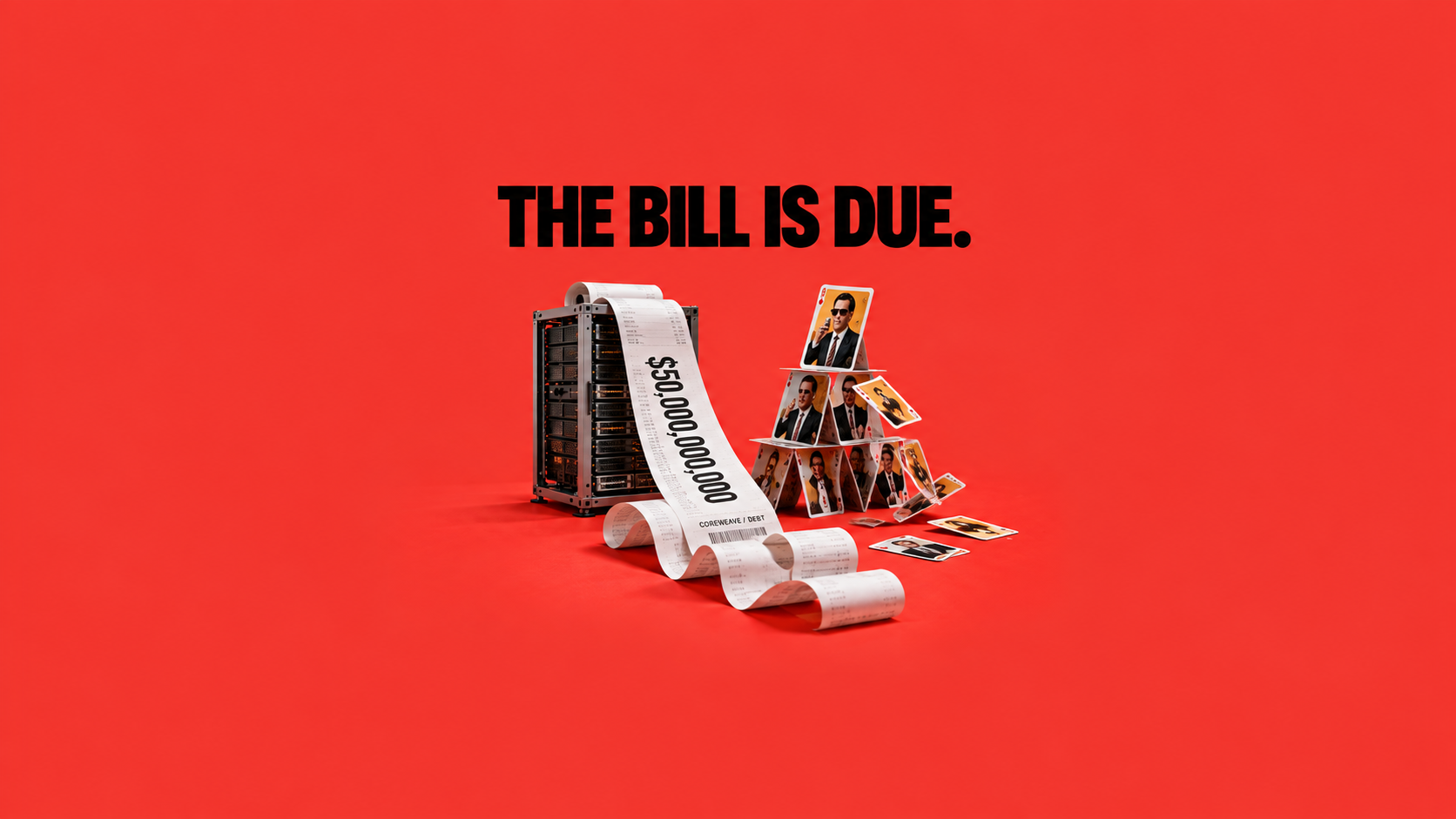
A sharp selloff in CoreWeave shares and bonds has turned the Nvidia-backed cloud provider into a test case for the debt-financed AI infrastructure boom. Investors are asking whether companies can earn enough from renting computing capacity to pay for the chips, energy and data centers they are building today.
Bond yields approach 16 percent
According to Reuters, CoreWeave shares fell more than 15 percent during the week of October 16, while yields on its 2030 bonds rose by about five percentage points to nearly 16 percent. A higher bond yield means investors are demanding greater compensation for the risk of lending to the company. The price moves reflect a loss of confidence, not a confirmed default.
The business needs enormous investment up front
CoreWeave is part of a group of specialist AI cloud providers often called neoclouds. These companies spend heavily on GPUs, data-center capacity, land and power before they receive the full revenue from future customers. Their economics depend on high utilization, reliable delivery schedules and the ability to refinance or raise more capital when needed.
Reuters reports that CoreWeave carries roughly $50 billion in debt. For 2025, the company recorded $5.1 billion in revenue and a $1.2 billion net loss. Its expected 2026 capital expenditure is estimated at $35 billion to $39 billion, illustrating the gap between current operating results and the scale of planned investment.
Large contracts provide a counterargument
The company also has substantial contracted demand. Its revenue backlog stood at $104.2 billion at the end of the second quarter, followed by more than $25 billion in additional commitments early in the third quarter, according to Reuters. Chief executive Mike Intrator told employees that the backlog more than covers debt obligations and that the company continues to see strong customer demand.
Nvidia has agreed to purchase CoreWeave computing capacity that remains unsold to other customers through April 2032. That arrangement provides support, but it does not eliminate construction, financing, execution or profitability risks.
Why the concern is spreading beyond CoreWeave
Investors have also been re-evaluating other debt-intensive AI infrastructure businesses as borrowing costs rise and some data-center projects face delays. Reuters reported that planned listings linked to AirTrunk, Firmus and SB Energy have been paused or withdrawn. The shift does not mean AI demand has vanished; it means investors are being more selective about which companies can fund and deliver the expansion.
What to watch next
The most important questions are whether data centers are completed on schedule, how much of the planned capacity customers actually use, and whether recurring revenue can grow faster than interest costs and capital spending. A strong order book helps, but cash flow and access to financing ultimately determine whether the growth model is sustainable.
Why it matters
The AI economy is no longer being judged only by new model launches or demand for GPUs. The financing behind those systems is now part of the story. CoreWeave is a visible stress test for the assumption that future compute demand will always justify rapidly rising debt.
Source: Reuters, October 16, 2026 .
Source: Reuters