Samsung creates CEO-level robotics division to make physical AI a growth engine
Published
Samsung Electronics has created a dedicated robotics division that will report directly to the company’s chief executive, placing physical AI and huma...
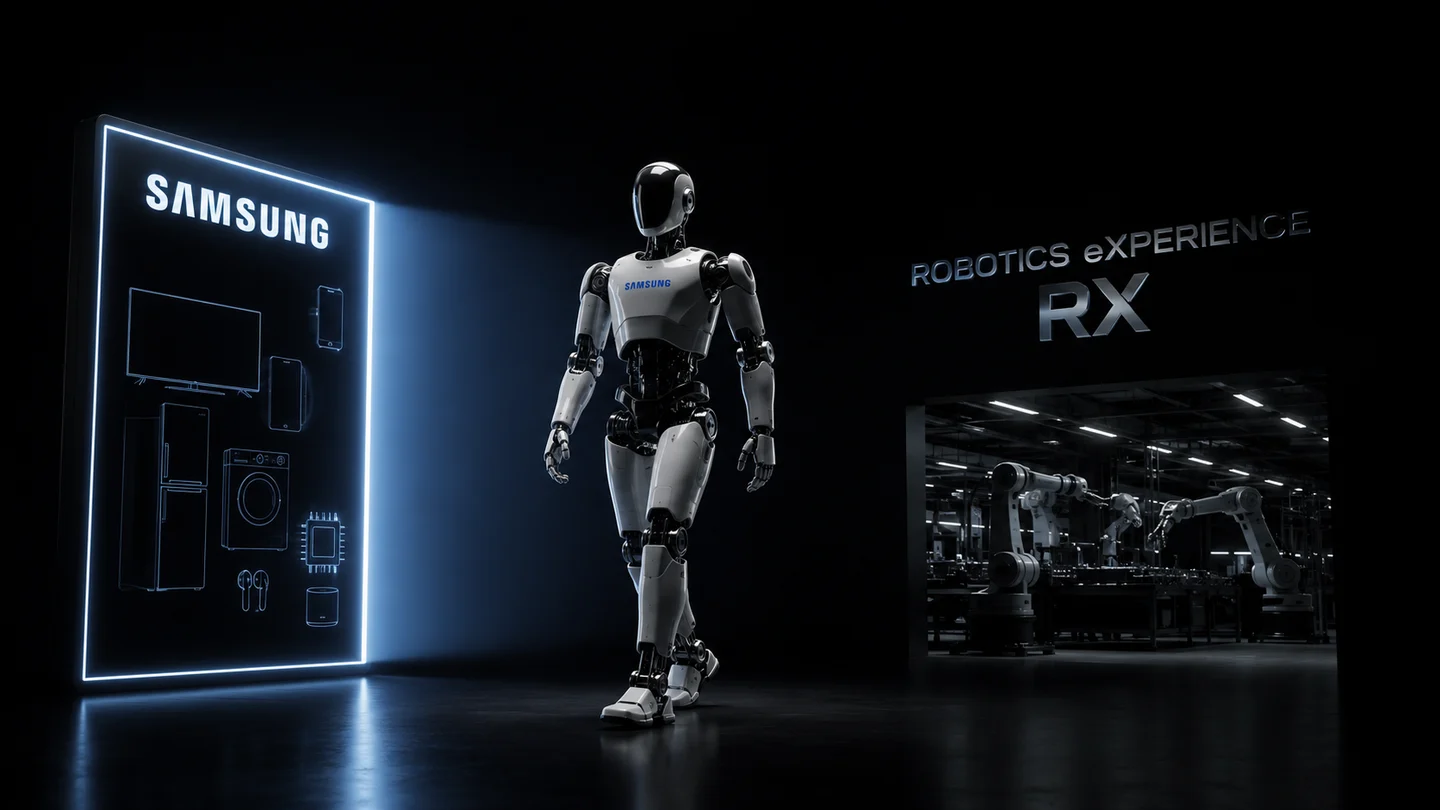
Samsung Electronics has created a dedicated robotics division that will report directly to the company’s chief executive, placing physical AI and humanoid systems at the center of its next growth strategy.
A new RX division
The unit is called RX, short for Robotics eXperience. It will coordinate Samsung’s mid- and long-term robotics strategy, core technology development, commercial execution and expansion of research capabilities in South Korea and overseas.
Former Hyundai robotics strategist joins the effort
Executive Vice President Lee Dongkun will lead the Robotics Strategy Team. Before joining Samsung, Lee worked on robotics strategy at Hyundai Motor Group, including the direction of Boston Dynamics.
Research hubs in three major markets
Samsung plans to establish robotics research hubs in the United States, China and Japan. The company says the centers will help it use local engineering ecosystems and expertise as competition in industrial and humanoid robotics accelerates.
Manufacturing comes first
Samsung expects the first practical deployments to focus on manufacturing, where humanoid robots could improve productivity and take on repetitive or physically demanding work. The company then plans to explore wider applications in homes and retail environments.
Physical AI becomes commercially viable
Samsung says progress in physical AI is making robotics businesses more viable. The company can combine semiconductor design, sensors, consumer hardware, software and global manufacturing operations inside a single robotics program.
A broader expansion strategy
The new division follows Samsung’s earlier statements that it could use partnerships, investments and acquisitions to accelerate robotics development. The company has also said it wants tangible results from its humanoid robotics business during 2026.
What remains uncertain
Samsung has not announced a commercial humanoid product, launch date or deployment volume. The creation of the RX division establishes a stronger corporate structure, but the company still needs to demonstrate reliable robots, competitive costs and measurable performance in real factories.
Practical significance
Samsung is one of the few companies with large businesses in chips, displays, sensors, appliances and manufacturing. A CEO-level robotics division could allow it to integrate those capabilities into physical AI products at a scale that smaller robotics startups cannot easily match.
The new division was reported by Reuters .
Source: Reuters