US and China plan September talks on frontier AI risks, Reuters reports
Published
The United States and China are preparing to hold talks on artificial intelligence in September, according to five people familiar with the plans cite...
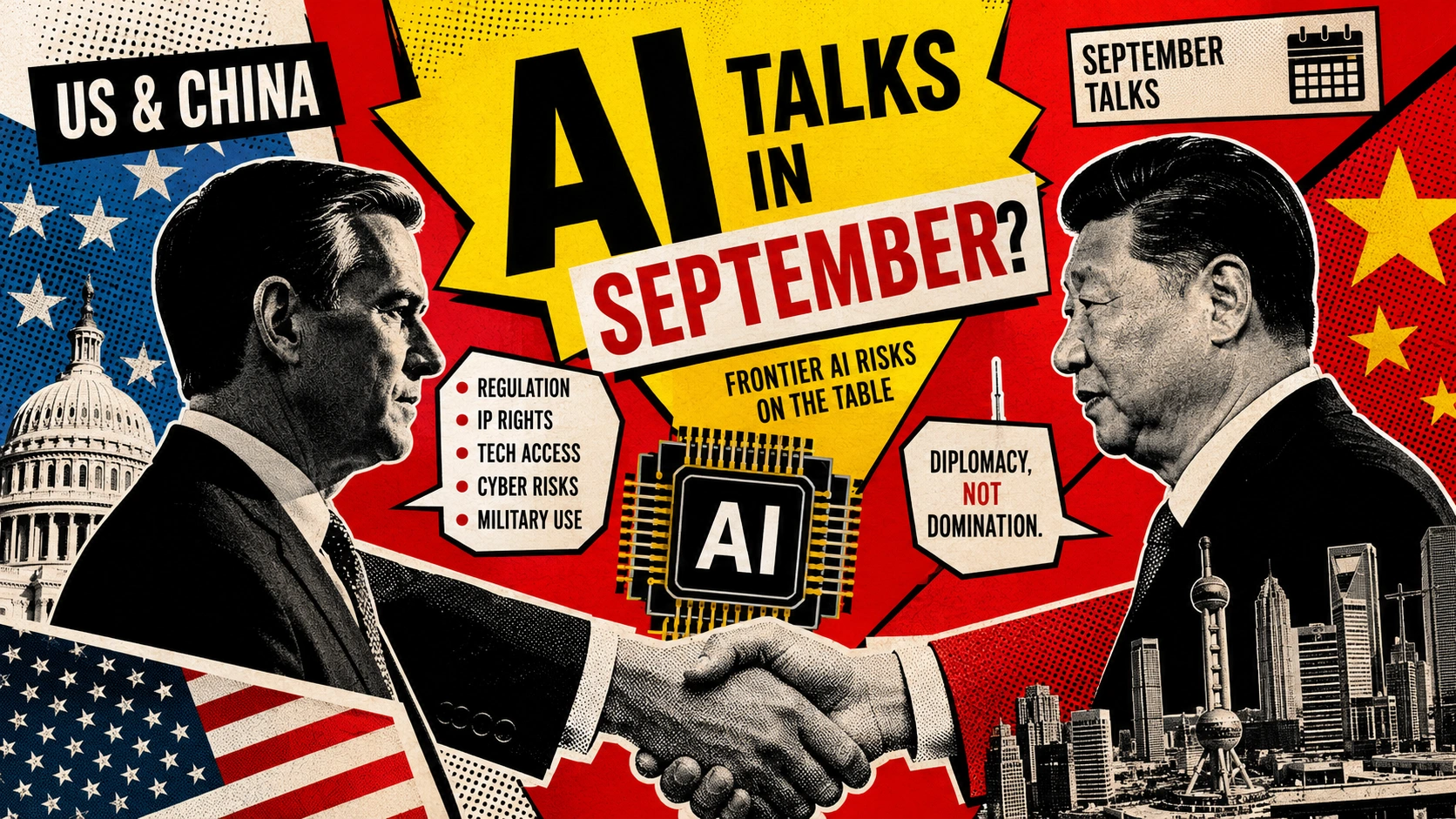
The United States and China are preparing to hold talks on artificial intelligence in September, according to five people familiar with the plans cited by Reuters. The meeting would focus on risks linked to increasingly capable frontier models, but the exact date, location, agenda and full list of participants have not yet been finalized.
A new channel for AI diplomacy
The planned meeting would be the first official U.S.-China dialogue focused on AI under President Donald Trump. Reuters reports that U.S. Treasury Secretary Scott Bessent is expected to lead the American delegation. Neither government had formally confirmed the final arrangements at the time of publication.
What the two sides may discuss
Potential topics include the definition and oversight of frontier AI models, intellectual-property concerns, access to advanced systems and the risk that powerful models could support military operations or cyberattacks against critical infrastructure.
Technology controls remain part of the backdrop
The talks would take place while Washington continues to restrict exports of some advanced AI chips to China. At the same time, both governments are considering how to control access to their most capable models without completely closing the door to technical cooperation.
Limits of the first meeting
Because preparations are still at an early stage, the initial session is unlikely to produce a comprehensive agreement. A more realistic outcome would be common terminology, a process for future discussions or limited principles around the release and cross-border use of frontier models.
Why the talks matter
AI has become a central issue in the strategic relationship between the world’s two largest economies. A dedicated dialogue could create a basic mechanism for reducing misunderstandings around model releases, cyber risks and national-security concerns, even if broader technology competition continues.
The plans were first reported by Reuters .
Source: Reuters