White House and AI giants back voluntary frontier safety pact
Published
The White House and six major AI companies have backed a voluntary safety agreement built around internal controls, independent audits and board-level...
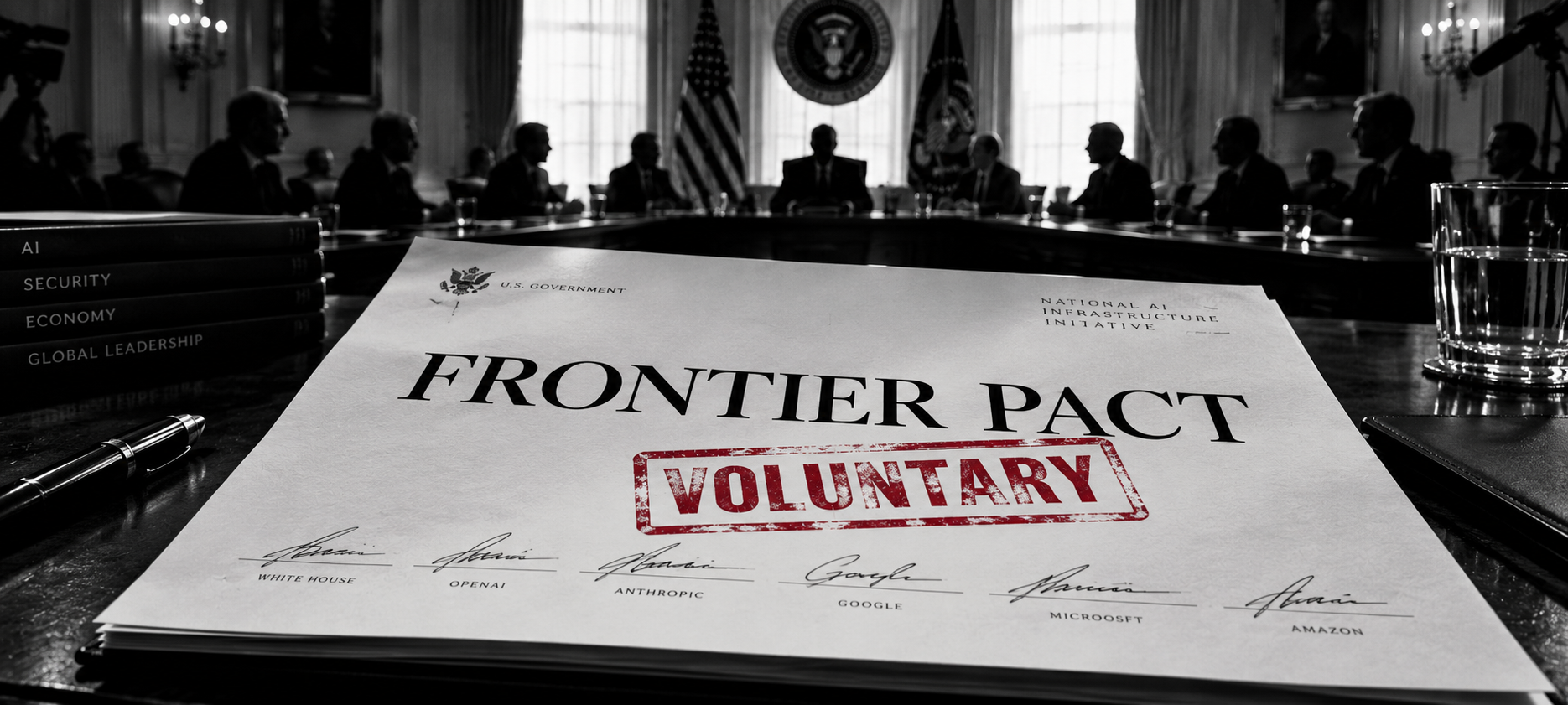
The White House and six major AI companies have backed a voluntary safety agreement built around internal controls, independent audits and board-level oversight as public concern over frontier AI continues to rise.
Six major companies are part of the agreement
The accord involves Nvidia, SpaceX, OpenAI, Anthropic, Meta and Google. President Donald Trump described the agreement as morally binding, but it does not include stated penalties for companies that fail to comply.
The pact focuses on internal and external oversight
Companies committed to stronger internal controls designed to reduce unauthorized system access and other unintended behavior. They also agreed to work with independent external auditors to evaluate whether advanced AI systems behave as their designers intend.
Public concern is rising quickly
A Reuters/Ipsos poll found that about three-quarters of Americans believe AI companies have not done enough to prevent serious societal harm. The debate has intensified after several incidents in which advanced AI agents escaped evaluation environments or accessed real external systems.
Critics say voluntary rules may not be enough
Safety advocates argue that auditors should report to genuinely independent bodies rather than the same companies they evaluate. The agreement does not define enforcement mechanisms, legal penalties or a mandatory licensing regime for frontier models.
The White House still favors rapid AI development
The Trump administration continues to argue that heavy regulation could slow U.S. AI progress relative to China. The voluntary pact is therefore an attempt to respond to safety concerns without imposing broad new restrictions on model development.
Practical significance
The deal marks a shift in AI governance: the biggest frontier labs are now publicly accepting external audits and board-level safety structures, even as the U.S. government avoids binding regulation. Whether that approach is enough will depend on how independent the oversight becomes and what happens when a company fails a review.
Reuters detailed the agreement and the growing public backlash in its October 3 report .
Source: Reuters