Anthropic finds AI agents log six times more work hours than employees
Published
Anthropic has released a detailed internal study showing how AI agents are changing the structure of work at one of the companies building frontier AI...
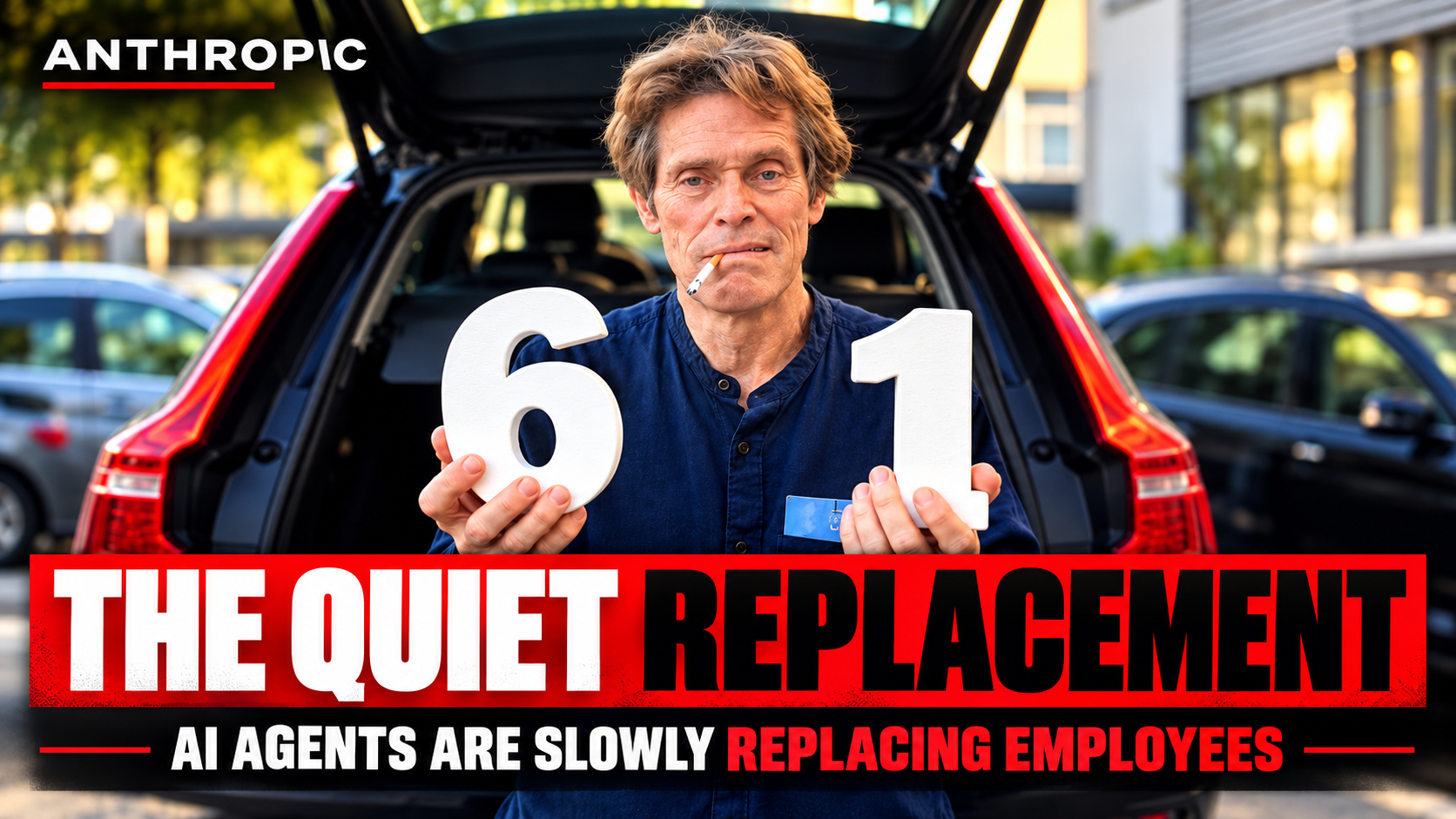
Anthropic has released a detailed internal study showing how AI agents are changing the structure of work at one of the companies building frontier AI. By August 2026, employee-directed interactive agents logged six times as many active runtime hours as the company's estimated human work hours. The finding comes alongside faster software output, changing hiring priorities and a growing burden of supervising agents.
What the six-to-one figure actually measures
The study uses telemetry from agent sessions and an estimate of employee working hours based on a 40-hour week. Agent working time includes model inference and active tool use, while excluding waits longer than 30 minutes. Multiple agents can run in parallel for a single employee. The resulting six-to-one ratio is a comparison of measured runtime, not a claim that AI delivered six times as much useful work as people.
Junior technical hiring is losing share
Anthropic reports that junior-level roles accounted for 27% of new technical hires in early 2025, compared with 9% more recently. The share of junior employees within technical departments also declined from 21% to 14%. The company is still expanding and technical hiring has continued in absolute terms, so these figures describe a shift in hiring composition rather than a company-wide hiring freeze.
Some engineering and research managers said stronger coding tools had reduced their need to hire for entry-level implementation tasks. The report also finds more emphasis on candidates' judgment, autonomy and ability to use AI effectively.
More output per employee, with important caveats
Code commits per engineer increased to about five times their level six months earlier, according to Anthropic. The study also associates agent adoption with higher code output by individual engineers and reports increased activity in sales, finance and legal workflows.
The researchers caution that more code does not necessarily translate into better software or stronger business results. Their quality-proxy comparisons found no clear increase in deletions or reverts for agent-generated code, but those measures cannot capture every kind of error. Tool adoption was not randomized, so some of the observed gains may also reflect differences between employees or projects.
Human attention becomes the bottleneck
A striking result is that interactive agent sessions spend roughly 80% of their wall-clock duration waiting for human input, even as active agent runtime scales rapidly. Employees increasingly build dashboards, standing instructions and agent-review workflows to manage the resulting volume of code, messages and decisions.
Anthropic estimates that simply reading the output generated by interactive agents would take more than half of a non-technical employee's work week under its reading-speed assumptions. The work of managing, evaluating and redirecting agents is becoming a job in its own right.
The implications go beyond software engineering
The report describes sales staff using agents to handle routine communications, lawyers automating first-pass reviews, recruiters building sourcing and tracking workflows, and administrative teams offloading scheduling tasks. Employees have also been moved into different departments as particular workstreams become automated.
Does this predict the future of jobs?
Anthropic is an unusually AI-intensive workplace with early access to powerful models and extensive internal tooling. Its results should not be projected mechanically onto ordinary companies or the wider labor market. A companion survey published on October 16 found that Anthropic employees expect far more of their own work to become automatable by 2030 than the average U.S. worker, but those responses measure expectations, not actual future displacement.
Why it matters
The report offers a concrete picture of an agent-heavy organization: fewer junior roles as a share of hiring, more output per employee, and a shift from executing tasks to supervising systems that execute them. It also exposes the unresolved challenge: organizations may gain speed while making it harder for newcomers to acquire experience and for existing employees to keep up with the volume of AI-produced work.
Source: Anthropic, How employment is changing at Anthropic . Related research: The AI expectations gap .
Source: Anthropic
News context
MORE FROM RESEARCH
Meta models cut scientific image analysis from months to minutes
Meta says its open-source vision models are being used by U.S. national laboratories to turn scientific image analysis from a monthslong manual proces...