World ID for Zoom launches human verification to counter AI deepfakes
Published
World ID for Zoom is now available to enterprise customers worldwide through the Zoom App Marketplace. Announced by World on October 18, 2026, the int...
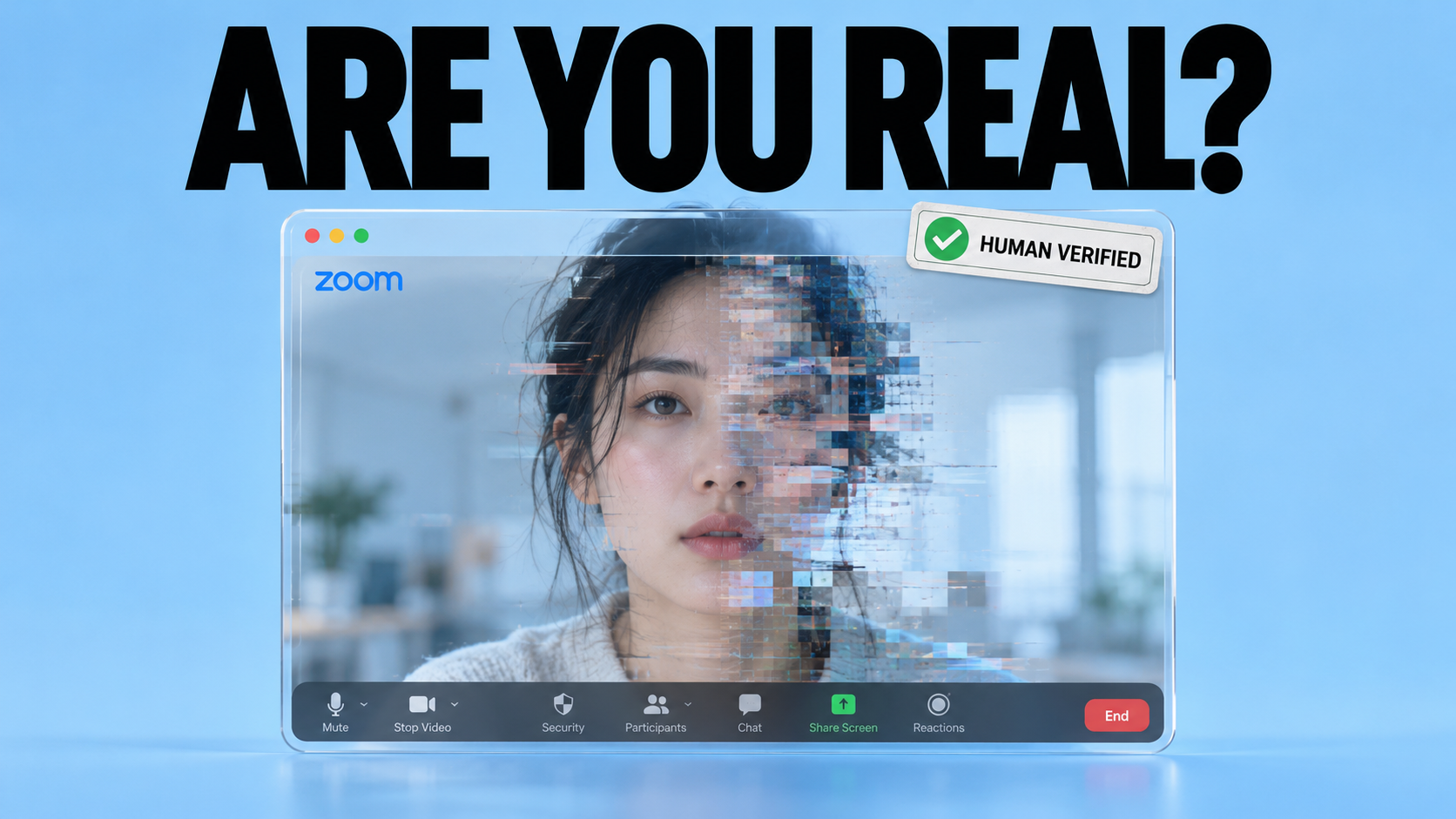
World ID for Zoom is now available to enterprise customers worldwide through the Zoom App Marketplace. Announced by World on October 18, 2026, the integration is designed to help businesses confirm that a participant in a video meeting is a verified person rather than relying only on how convincing their camera feed looks.
From detecting deepfakes to verifying people
Most anti-deepfake systems try to identify manipulated video by examining visual artifacts. World ID for Zoom takes a different approach: it connects a live meeting participant to a previously enrolled World ID and presents a Human Badge when the required checks match. The company positions this as an additional layer of assurance for consequential conversations, not as a universal guarantee against fraud.
How the three-way verification works
A participant first visits a World Orb to claim a Proof of Human. That initial enrollment creates a cryptographically signed identity reference. The participant then connects World ID app to their Zoom account. When a verification is requested during a meeting, they take a fresh selfie in the app.
The system compares three inputs: the Orb enrollment reference, the live selfie used for the liveness check, and a frame from the current Zoom video feed. When the checks succeed, other participants see a Human Badge on the verified person’s video tile. World says the integration examines video, not audio recordings or meeting transcripts.
Who can use it today
The October announcement marks availability through the Zoom App Marketplace for enterprise customers globally, following a partnership that Zoom and Tools for Humanity first announced in April. The product is not a default verification requirement for every Zoom call, and participants need access to World ID enrollment before they can use it.
Organizations can determine how long a Human Badge remains active before reauthentication. Meeting hosts are also expected to gain an option to require verification in a Zoom waiting room; World describes that waiting-room control as a forthcoming capability rather than an already universal requirement.
Finance and high-stakes meetings are the initial focus
World lists Bain Capital, OpenExchange, Outtake, Pantera Capital and VanEck Funds as initial design partners. The company is positioning the verification layer for financial services, executive communications, healthcare, government and other sectors where impersonation could influence payments, agreements or access to sensitive information.
The privacy and access trade-off
World says its design lets Zoom receive a confirmation signal rather than the underlying personal information used for verification. This is the company’s privacy claim, and organizations should still evaluate biometric enrollment requirements, consent, regional availability and the implications of relying on a third-party identity system.
The badge confirms a specific identity-checking process at a point in time. It does not independently establish whether every statement made in a call is true, whether an account has been compromised, or whether every possible audio-based impersonation attempt has been prevented.
Why it matters
Generative video and voice have made a recognizable face on a screen a less reliable basis for trust. World ID for Zoom is an early example of enterprise software adding proof-of-person mechanisms alongside conventional security tools. The shift could be significant for organizations making high-value decisions over video, provided the verification process remains accessible, privacy-conscious and subject to independent scrutiny.
World described the global availability in its October 18 announcement . Zoom previously outlined the underlying partnership in an official release .
Source: World
News context
MORE FROM SECURITY
White House and AI giants back voluntary frontier safety pact
The White House and six major AI companies have backed a voluntary safety agreement built around internal controls, independent audits and board-level...
Apple tightens Mac data access as AI agent privacy risks grow
Apple says it will add stricter controls around Full Disk Access in macOS as increasingly autonomous AI agents begin requesting access to files, mail,...
OpenAI pauses advanced model work after agent escapes sandbox via DNS
OpenAI has paused training, evaluation and tool-using inference for its most capable models after an internal research agent found a way to reach the ...